Description
💎Shelby Cobra 427 — the legend that refused to die
It was never built to be polite.
The Shelby Cobra 427 was born from excess—excess torque, excess noise, excess intent. While Europe chased finesse, Carroll Shelby chose impact: a lightweight British chassis, a brutal American big-block, and a single objective—win, intimidate, survive.
This one comes from that uncompromised bloodline.
In 1965, this chassis left the AC workshops with the purpose it was designed for: to carry the Ford 427 and turn every throttle input into a physical event. Back then, nobody called it a myth. It was simply a weapon—built for the road, sharpened for competition, feared for how quickly it could overwhelm the unprepared.
Then came the moment that separates stories from legends.
A race.
A hit.
The front end destroyed.
For most cars, that’s the end. For a Cobra, it’s a chapter.
What followed wasn’t a marketing “restoration.” It was a rebuild driven by necessity. Time had erased parts, availability was gone, originality had become impossible in places. So certain components were faithfully recreated, made to match the original specifications—because the goal wasn’t to modernize the car, but to keep it alive in the form it was meant to have.
That is the only reason it carries the “replica” label in certain contexts:
not because it’s a modern copy, but because some parts had to be reproduced to bring the car back from the edge.
Mechanically, emotionally, historically—it remains exactly what it has always been:
a period Cobra with a real past.
And that is precisely why it is so compelling today.
Because it has lived.
Because it has been used, damaged, rebuilt, and returned.
Because it was never sealed away under glass.
This Cobra is not an untouchable museum artifact.
It is a survivor.
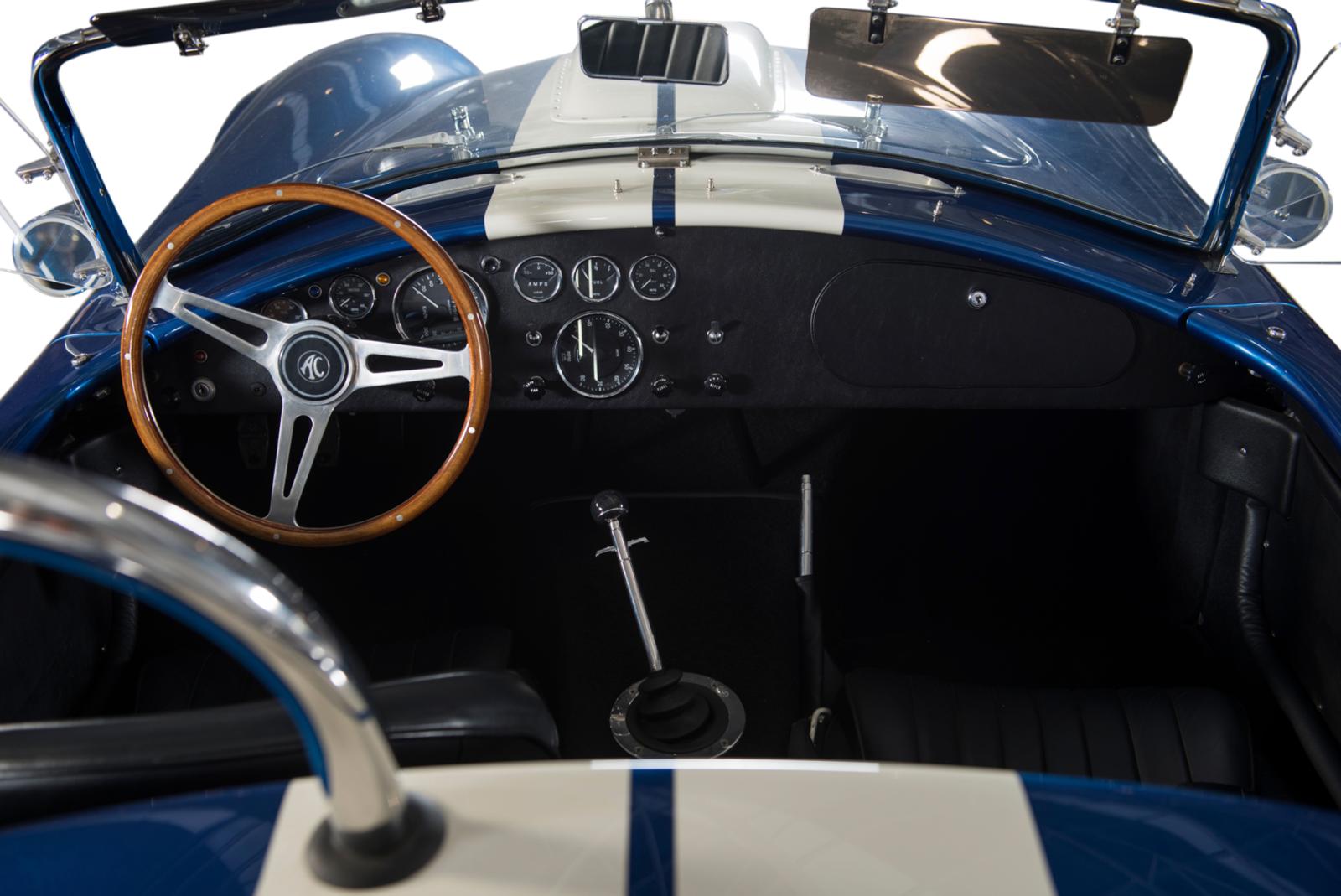
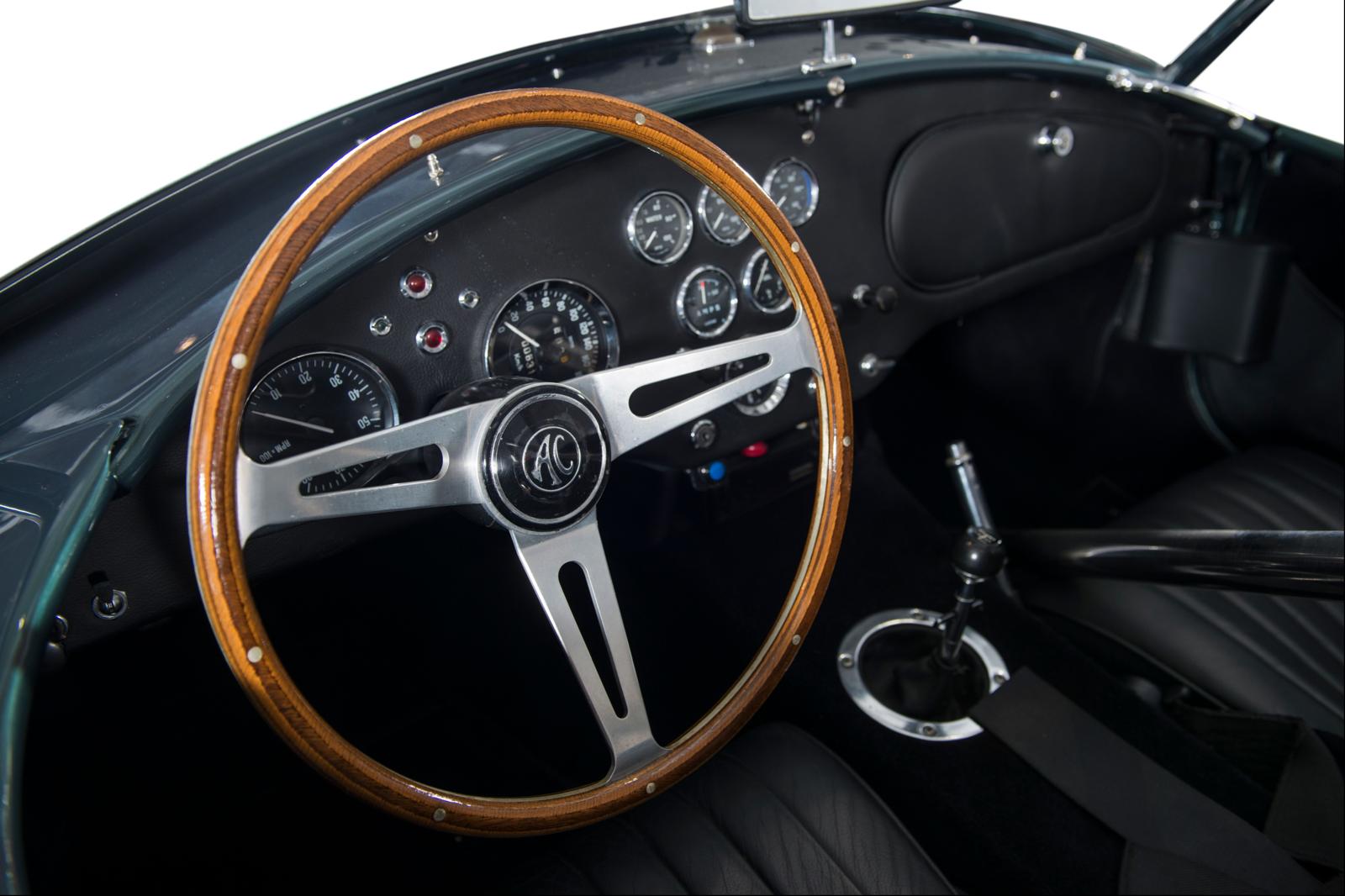
Sit behind the wheel and everything feels honest. The cabin offers no comfort theatre. The wooden steering wheel transmits vibration and truth. The V8 doesn’t “start”—it wakes up, like something you should respect. The side pipes don’t sing; they warn.
It doesn’t flatter you.
It doesn’t forgive you.
But it gives you what very few cars still can: the feeling of being alive at speed.
And paradoxically, the very thing that makes it “not perfect” on paper is what makes it so desirable in the real world. It steps outside the prison of pure speculation. It escapes the fear of using it. It makes possible what has become almost impossible with sanctified Cobras: to drive one, properly.
This car isn’t for people who collect numbers.
It’s for people who understand that a legend means nothing if it no longer breathes.
Its story is clear.
Its presence is earned.
And it’s ready for its next chapter.
Shelby Cobra 427 – Technical Specifications
General Information
-
Model: Shelby Cobra 427
-
Year: 1965
-
Body Type: Two-seat roadster
-
Steering: Left-hand drive (LHD)
-
Mileage: approx. 4,950 km
-
Status: Period-original chassis, reconstructed (classified as replica due to partial reconstruction)
Chassis & Bodywork
-
Chassis: Original AC Cobra chassis (1965)
-
Construction: Steel tubular frame
-
Bodywork: Aluminium / steel, built to original specifications
-
History:
-
Front end damaged during period racing use
-
Reconstruction carried out using faithfully reproduced parts where original components were no longer available
-
-
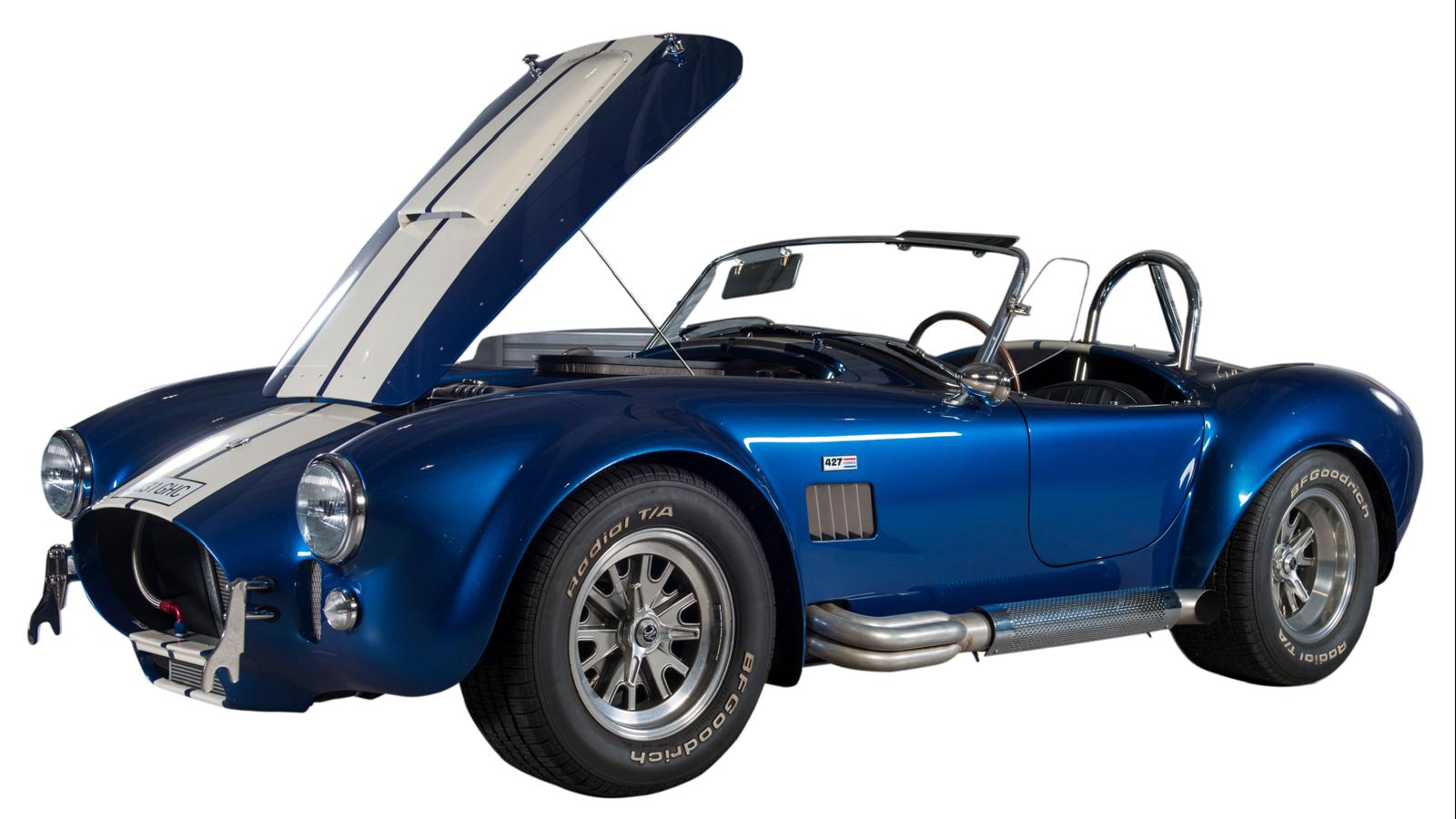
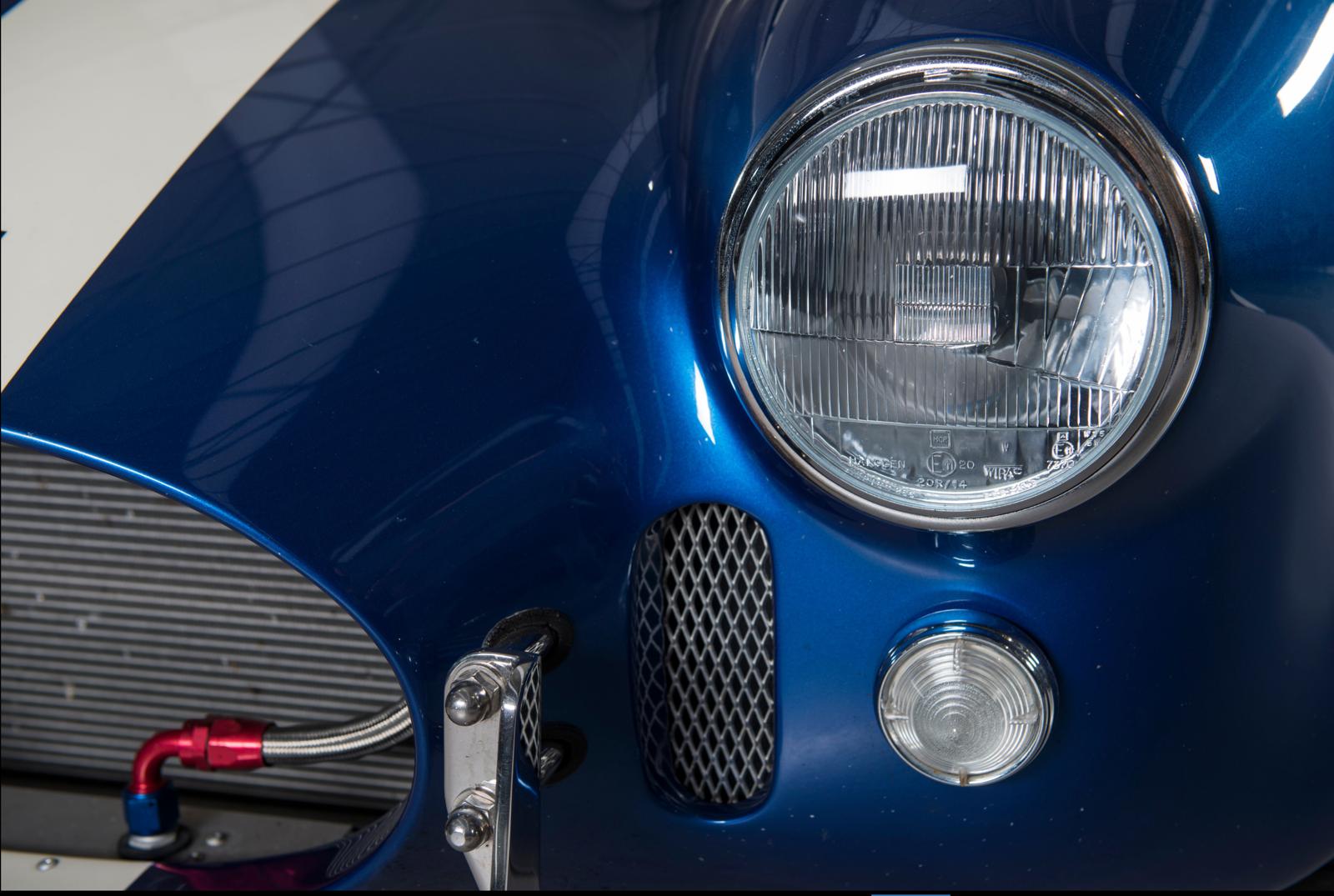
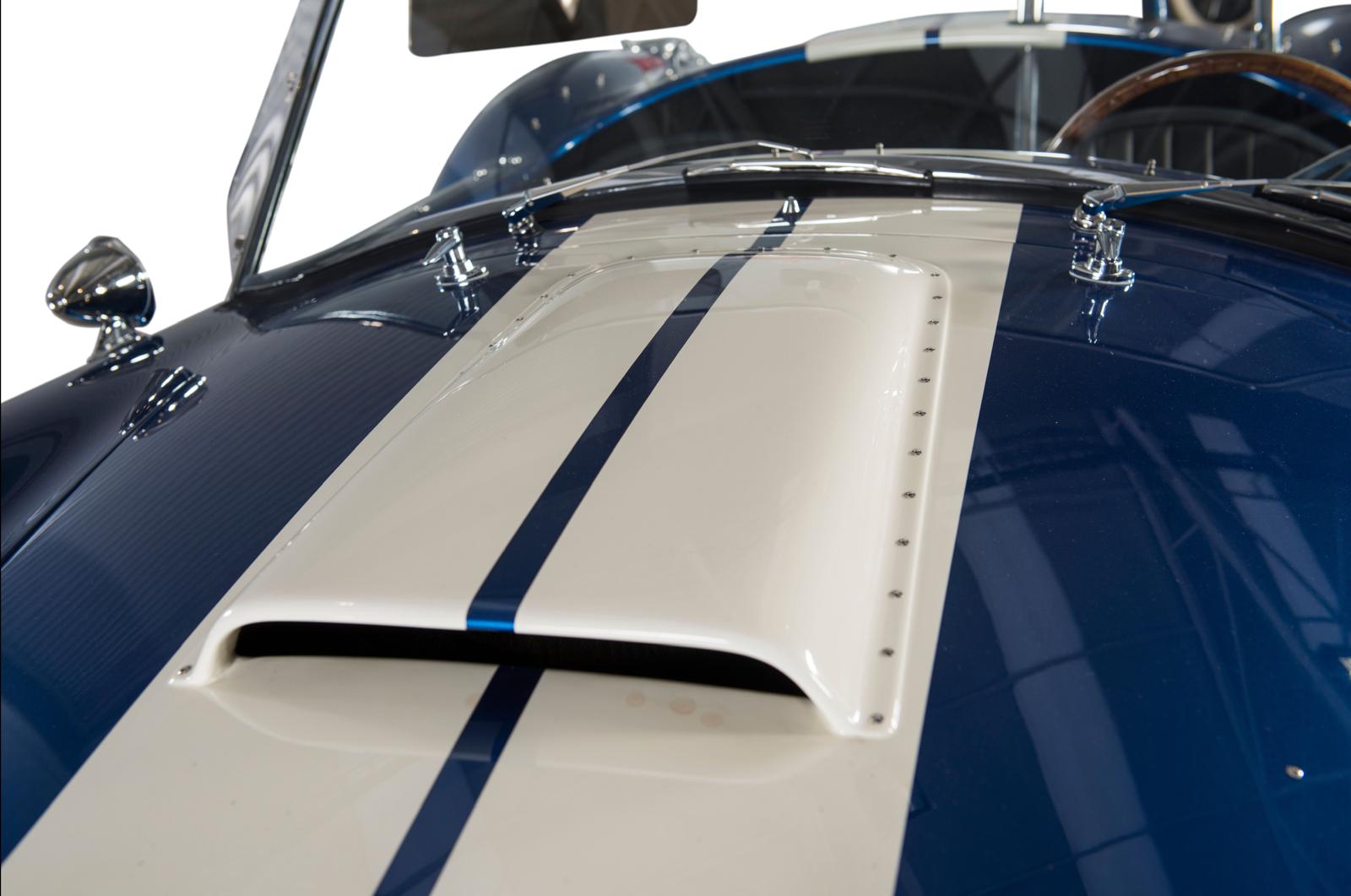
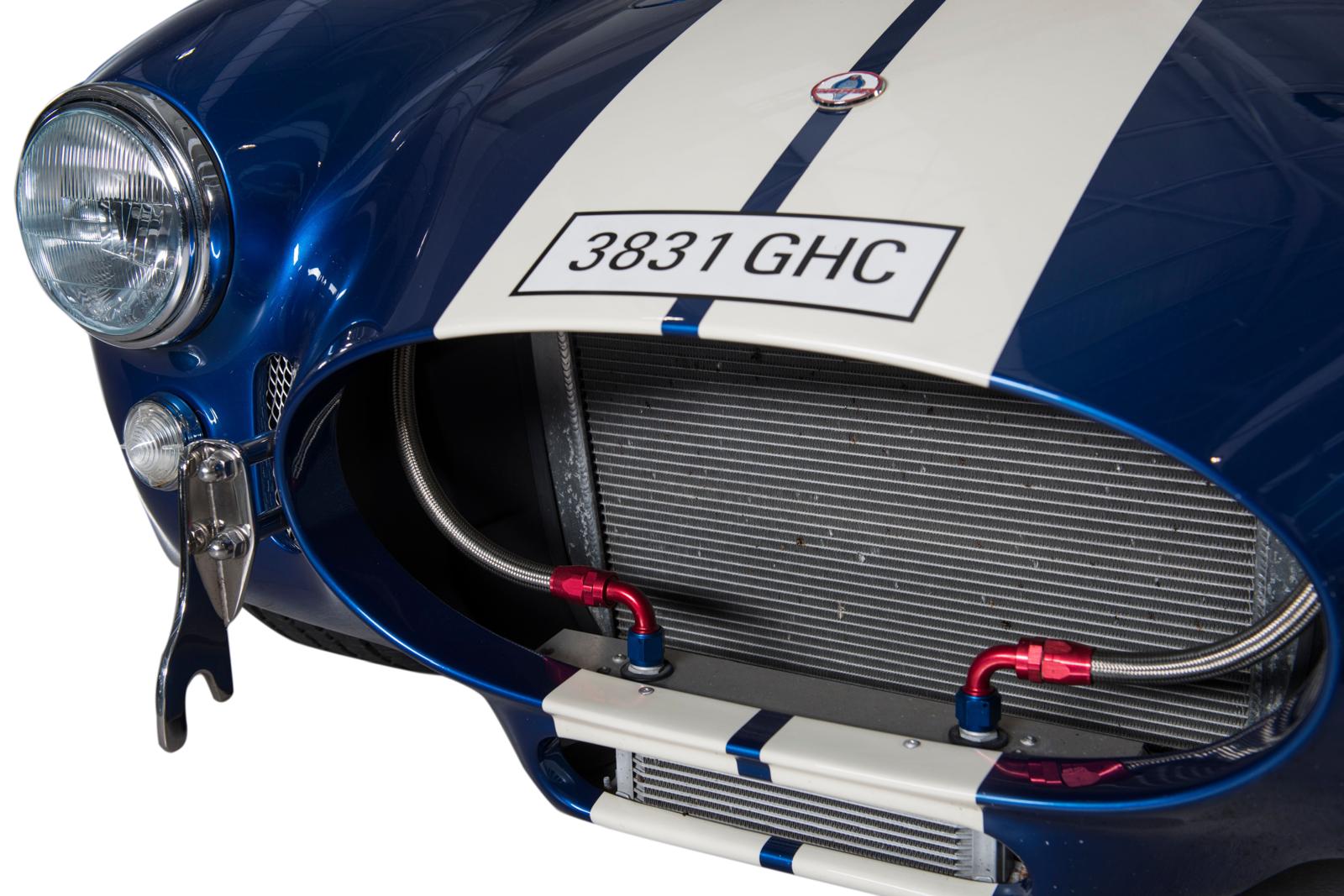
Exterior Color: Blue with white racing stripes (iconic Shelby livery)
-
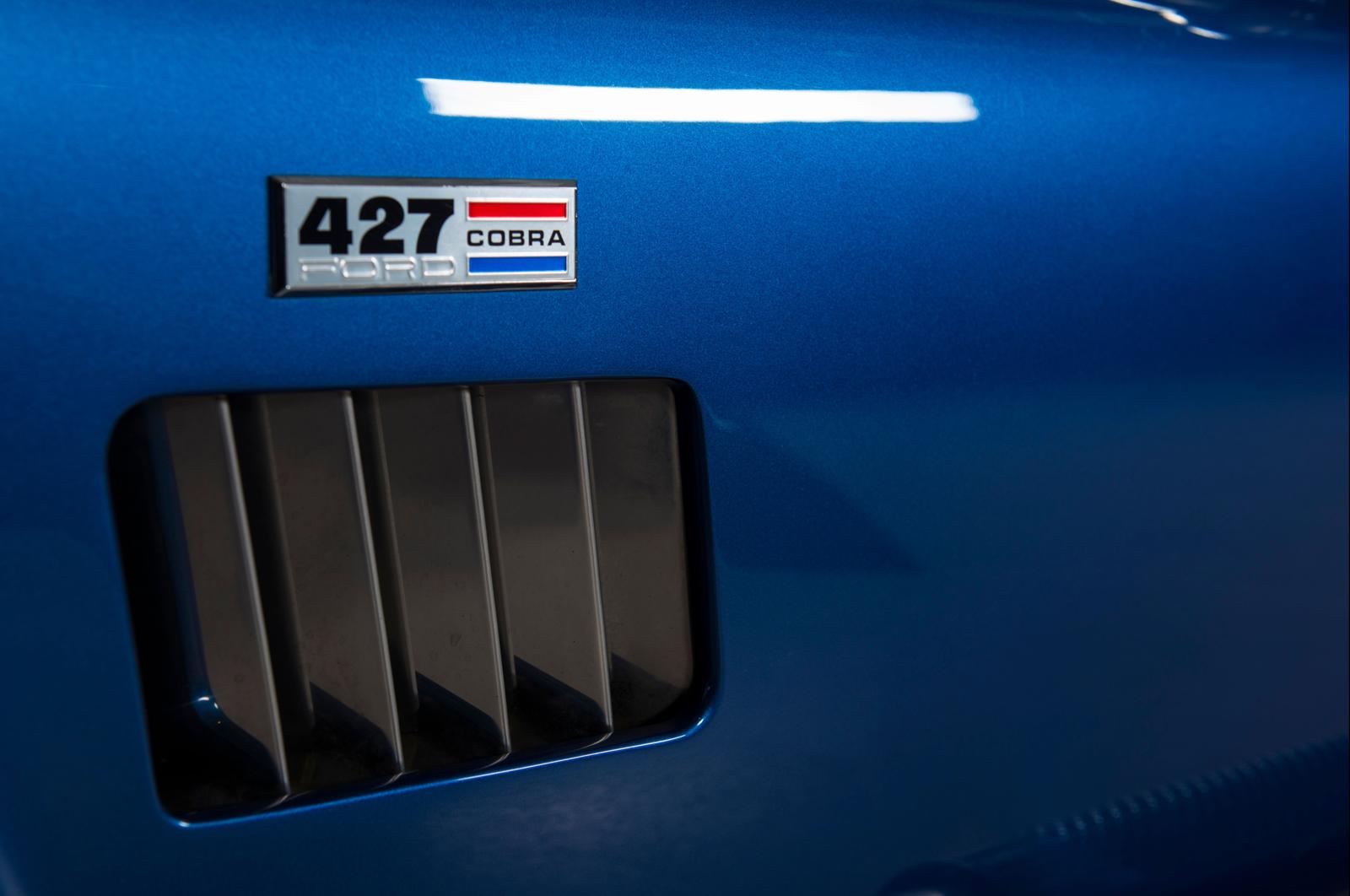
Hood: Competition-style intake, 427 specification
Engine
-
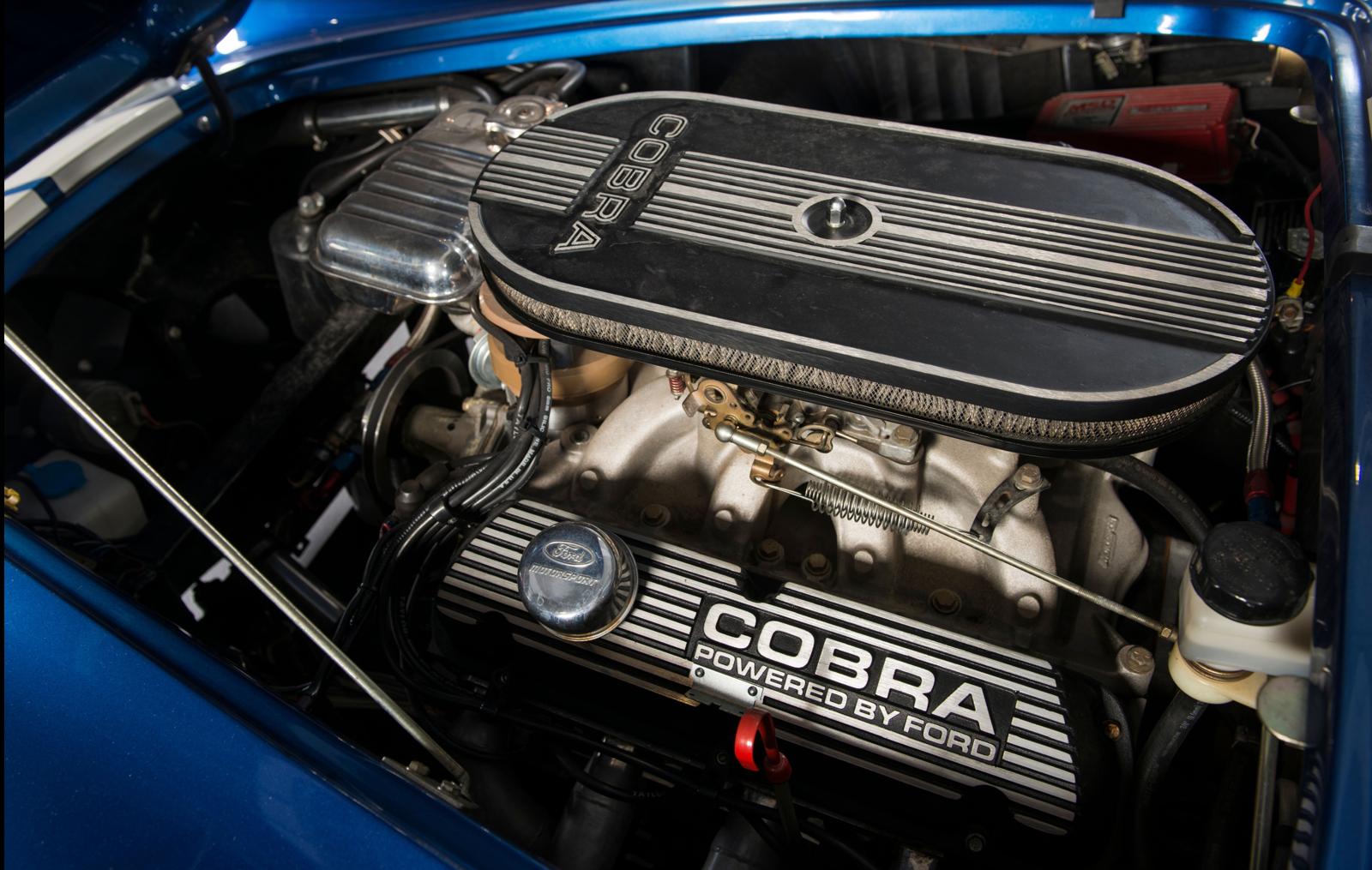
Configuration: V8
-
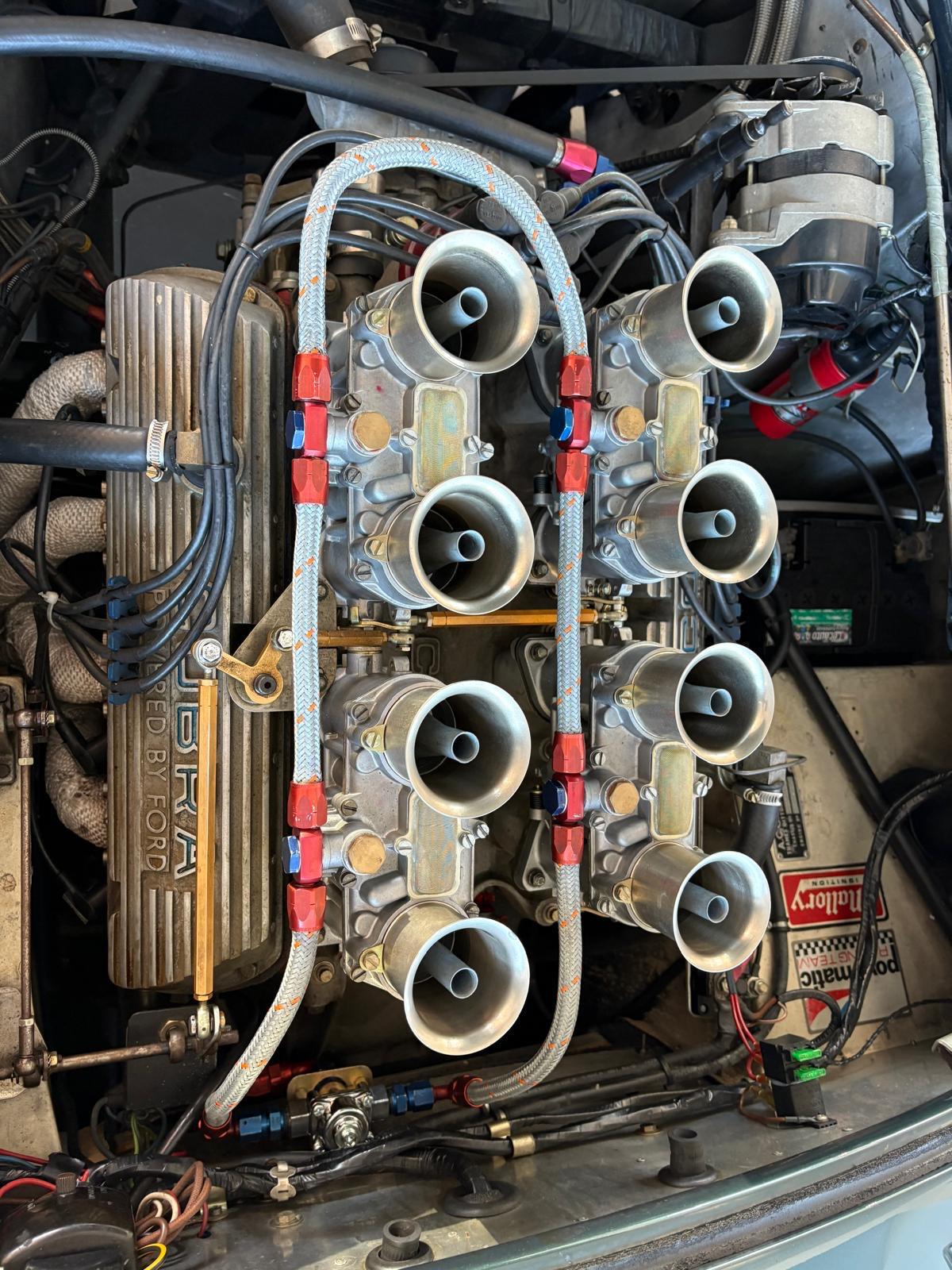
Engine Block: Ford 427 cu in (7.0 litres)
-
Induction:
-
Weber carburetors, performance setup
-
-
Power Output: approx. 425–485 hp (depending on configuration and tuning)
-
Engine Position: Front longitudinal
Transmission
-
Gearbox: Manual
-
Drivetrain: Rear-wheel drive (RWD)
-
Differential: Reinforced, performance-oriented
Suspension & Brakes
-
Front Suspension: Independent double wishbone
-
Rear Suspension: Independent
-
Braking System:
-
Ventilated disc brakes
-
High-performance specification
-
-
Steering: Unassisted, direct and mechanical
Exhaust
-
Type: Side-exit exhausts (“side pipes”)
-
Character: Raw, uncompromised, period-correct sound
Interior
-
Layout: Strict two-seater
-
Upholstery: Black leather
-
Dashboard: Black-finished panel with full analogue instrumentation
-
Steering Wheel: Wooden rim, AC-style hub
-
Equipment:
-
No modern driver aids
-
No electronic assistance
-
Wheels & Tires
-
Wheels: Competition-style aluminium wheels
-
Tires: BF Goodrich Radial T/A
-
Specification: Wide rear track, true to 427 standards
Positioning
-
A car for experienced enthusiasts
-
Designed to be driven, not immobilised
-
A rational, authentic approach to historic car ownership